Backyard Master
- 4.4
- Rating
- 10.00M
- Installs
- Free
- Price

 Analysis by App-foxy
I spent time with Backyard Master as a casual simulation game, and my first impression was pleasantly simple: it turns the idea of improving a backyard into a sequence of small decisions and satisfying progress. It is published by Supersonic Studios LTD, available for free, and aimed at players who enjoy short, easy-to-start sessions rather than a demanding strategy campaign. The store summary calls it “Your Perfect Backyard!”, but I found the real appeal less about perfection and more about the steady rhythm of making a space feel more complete.
That distinction matters. This is not the kind of simulation I would choose when I want deep construction planning, realistic management, or a large world to explore. It is better suited to the moment when I have a few minutes, want visible progress, and do not want to learn a complicated rule system first. The game’s 4.4 average from around 109 thousand ratings suggests that this straightforward approach works for many players, although popularity alone does not make it the right fit for everyone.
How the backyard-building loop feels in everyday play
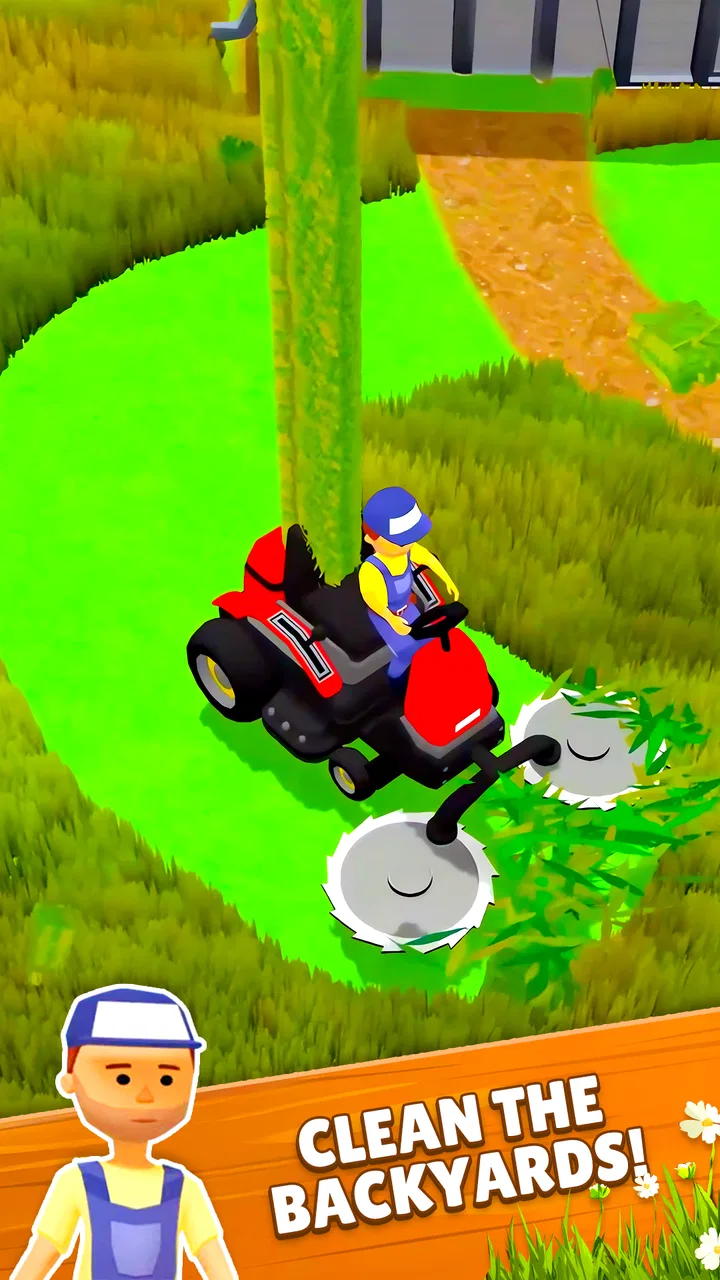
The central experience is easy to understand: I work toward a more attractive and finished backyard through simple tasks and incremental improvements. That makes the game approachable from the first session. I do not need to remember a long tutorial or understand several layers of management before seeing why the next action matters. The visual promise of improving the space gives each small step a clear purpose.
You May Also Like

 Blood Strike: 2.5 Anniversary
Blood Strike’s Loadouts Turn Every Drop Into a Tactical Gamble
A close look at Blood Strike’s custom loadouts: how fast access to signature weapons reshapes its battle royale rhythm, rewards preparation, and narrows the gap between fights.

 Pandora - Music & Podcasts
Pandora’s Music Is Easy to Start, but Harder to Recover
Pandora’s strength is its low-effort path from a seed to a station. Its weak spot is how much confidence it asks you to place in connection, setup, and quiet recovery.

 8 Ball Pool
 Is Built on Rivalries, Rematches, and Routine
A close look at the rivalries, rematches, shared routines, and unanswered safety questions that turn a quick pool match into a persistent mobile community.

 Samsung Music
’s Quiet Strength Is Playing What You Already Own
Its reach comes less from spectacle than from dependable access to a personal library. That simplicity is both the app’s strongest retention engine and its ceiling.

 AccuWeather: Weather Radar
AccuWeather Review: A Quick, Clear Forecast for Everyday Decisions
For everyday plans, the best forecast is the one you can understand quickly. AccuWeather makes rain timing, radar, and local conditions easy to act on, with a few trade-offs.

 Hill Climb Racing
Why Hill Climb Racing Still Turns Crashes Into One More Run
A tiny car, a bumpy hill and one more upgrade: Hill Climb Racing keeps resurfacing because its simple chaos makes every near-miss feel personal.
More From Our News Desk



In practice, I found the best way to play was to treat it as a short-session game. I could open it while waiting for an appointment, complete a few actions, and leave without feeling that I had abandoned a complicated project. Returning later still made sense because the backyard provided an immediate visual reminder of where I had stopped. That kind of continuity is more important here than a dramatic story or a difficult challenge.
A useful habit is to look at the whole yard before spending time on the next available improvement. Instead of tapping through every prompt automatically, I paid attention to how each change affected the overall look. This made the game feel less like a checklist and more like a light design exercise. Players who enjoy arranging a space in their own head, even when the game keeps the choices simple, will probably get more from it than players who only want fast rewards.
The game’s simulation label should be understood in a relaxed way. I would compare it with casual renovation or idle-style improvement games rather than a serious architectural simulator. The emphasis is on accessible progress and the pleasure of seeing a backyard develop. It does not ask me to calculate complicated budgets, manage a large staff, or balance a detailed economy. That limitation is also part of its charm: there is less friction between opening the game and doing something useful.
What the free entry point really offers
Backyard Master can be downloaded and played without an upfront purchase, which makes trying it low-risk. That is the clearest value point for someone who is undecided. I could test the basic loop before committing any money, and that matters because casual simulation games can feel very different from one player to another. Some people enjoy repeated improvement tasks; others quickly find them too light.
The presence of optional in-app purchases changes the value conversation, but it does not erase the benefit of free access. The listed purchase range runs from $0.49 to $40.99 per item. I would therefore approach spending carefully and decide first whether the normal pace is enjoyable on its own. A free game can still be good value when I am happy to play within its ordinary rhythm, while a purchase is only worthwhile if it removes a frustration I genuinely have or supports a longer-term habit.
I would not describe the most expensive listed purchase as automatically good value simply because the game has a large audience. The price is a personal decision, and the useful question is whether the game has become part of my regular downtime. If I only open it once or twice, paying for acceleration would make little sense. If I return often and understand exactly what a purchase changes for my play style, the decision becomes more reasonable. The important point is to separate free access from paid convenience rather than assuming that every player needs to spend.
For families, the Teen content rating is worth noticing before installing. It does not tell me that every teenager will enjoy the game, but it does make the rating part of the basic suitability check. I would still look at the device’s purchase controls if younger players might use it, especially because optional items can be bought at different price points. That is a practical step, not a criticism of the game itself.
Small decisions that make the experience better
My first specific tip is to avoid treating every available action as equally urgent. When a game presents a series of improvements, it is tempting to select whatever is highlighted first. I got more satisfaction by deciding what kind of backyard I wanted the space to suggest before moving on. Even with a light simulation, a little intention makes the result feel more personal.
My second tip is to use the game as a decompression tool, not as a task that must be completed in one sitting. The design is more comfortable when I allow progress to happen gradually. Trying to force a long session can expose the repetition more quickly, while short visits preserve the pleasant feeling of returning to a familiar project. This is especially useful for players who like mobile games that fit around real life rather than compete with it.
A third insight is that the game works well as a test of patience. If I enjoy watching a space improve through several modest changes, the loop has a calming quality. If I need constant novelty, complex choices, or a strong sense of surprise, the same loop may feel thin. That is not a minor preference; it determines whether the free version feels generous or merely introductory.
I also recommend deciding in advance whether visual progress or mechanical depth is the main reason for playing. Backyard Master is strongest when the reward is seeing the environment become more appealing. Players who want a detailed simulation of landscaping, construction, or business operations should lower their expectations. A more specialized management game would offer deeper systems, while this one offers a cleaner and more immediately readable experience.
Where the trade-offs become noticeable
The biggest trade-off is simplicity. The approachable structure lets me begin quickly, but it also means that the experience may not provide enough strategic variety for someone who wants every decision to have long-term consequences. I could enjoy the first improvements and still eventually wish for more control over the final design or more demanding planning. The game is not failing when it stays simple; it is choosing a different audience.
Another trade-off is the relationship between free play and optional spending. Because the game is free to start, the natural temptation is to compare ordinary progress with any faster or more convenient path offered through purchases. I found it healthier to play first and spend later, if at all. That approach protects the relaxing quality of the game and prevents a small backyard project from turning into a series of purchase decisions.
The game may also be a poor choice for anyone looking for a fully open-ended creative tool. I would not install it expecting the same freedom as a dedicated design application or a broad building sandbox. Its appeal comes from guided improvement, not unlimited experimentation. That makes it easier to understand, but it also narrows the kind of creativity it supports.
Device compatibility is relatively broad: the current version is 2.8.1 and requires Android 7.0 or later. That is helpful for people using an older Android phone, although compatibility alone does not guarantee that every device will feel equally comfortable. I would still consider screen size and general performance when deciding whether a visually focused game will be pleasant on a particular phone.
The game has been available since November 23, 2023, and has reached over 10 million installs. Those figures help explain why it is easy to encounter as a mainstream casual title, but they should not replace personal testing. The free entry point is the better evidence for an individual player: install it, try the basic routine, and notice whether the backyard improvements remain satisfying after the first burst of novelty.
Who will get the most value from it
I would recommend Backyard Master to someone who likes gentle simulation games, visible upgrades, and short sessions. It is a particularly good match for players who want a game that can be understood without preparation. The backyard theme also gives the progress a warmer, more concrete feeling than an abstract collection of numbers. I enjoyed that each return had a recognizable setting rather than a purely menu-driven sense of advancement.
It can also suit players who are curious about simulation games but feel intimidated by complex management titles. This is a softer introduction to the genre. I could focus on the satisfaction of improvement without first learning production chains, staffing systems, or complicated resource relationships. If that sounds like the right level of involvement, the free download makes experimenting easy.
A realistic everyday scenario would be playing during a short evening break. After finishing dinner, I might open the game for a few minutes, make one or two improvements, look over the changed backyard, and close it before the session becomes a commitment. The same routine could work during a commute or while waiting for a friend, provided I am comfortable with a game built around gradual progress rather than a complete challenge in every sitting.
I would steer competitive players toward another option. Someone who wants rankings, intense tactical decisions, or a clear skill ceiling may find the backyard theme pleasant but the gameplay too undemanding. Likewise, players who prefer narrative adventures should not expect character-driven storytelling to be the main attraction here. A dedicated strategy, building, or story game would be a better purchase of time for those priorities.
It is also not ideal for people who dislike optional purchases on principle. Even though I can begin for free, the listed range of in-app items means spending is part of the surrounding experience. The best way to keep the game comfortable is to decide my boundary before I play. If the presence of purchases would make every improvement feel like a sales prompt, skipping it may be more enjoyable than trying to ignore that tension.
How it compares with familiar alternatives
Compared with a traditional city-building simulation, Backyard Master feels much lighter and more focused. A city builder usually asks me to think about multiple systems at once, while this game keeps attention on a single backyard and its gradual improvement. That makes Backyard Master easier to pick up, but it also means it cannot replace a deeper management game for players who enjoy planning networks, economies, or large-scale layouts.
Compared with a dedicated home-design app, it is more game-like and less like a professional planning tool. I would use a design application when I need precise control, realistic visualization, or a practical renovation plan. I would use this game when I want the emotional reward of improving a virtual space without needing an actual project. Confusing those two purposes would lead to disappointment.
Compared with idle games, its strongest advantage is the recognizable setting. Progress feels connected to a place rather than only to currency totals. The downside is that players who love constant automation and number growth may prefer a more heavily idle-focused alternative. My choice would depend on whether I want to watch a yard take shape or optimize a stream of resources.
That comparison also clarifies the game’s value. It does not win by offering the deepest systems in the category. It wins by reducing the distance between intention and reward. I can understand the setting, make progress, and leave with a visible change. For a free casual game, that is a meaningful strength, as long as I do not expect it to expand into a full creative sandbox.
My verdict on installing and spending
My recommendation is to try Backyard Master if I want a free, low-pressure simulation game centered on gradual backyard improvement. The no-cost entry point makes the decision easy, and the game’s accessible structure is its clearest strength. I found it most enjoyable when I played briefly, paid attention to the visual result, and resisted the urge to rush through every available step.
I would skip it if I need deep strategy, unrestricted building, competitive pressure, or a substantial narrative. I would also avoid spending immediately. The sensible order is to install it, learn whether the ordinary loop holds my attention, and only then consider an optional purchase. Since the available items range from small to much larger amounts, careful spending is more important than chasing faster progress.
Overall, Supersonic Studios LTD has made a focused casual game rather than an all-purpose simulation. That focus gives it a clear identity: a backyard project for players who enjoy small improvements and relaxed sessions. For me, the free version delivers enough of that idea to justify trying it, while paid value depends entirely on how often I return and whether I still enjoy the basic pace. If a calm, visual sense of progress is what you want, this is worth a test; if you want control, complexity, or competition, choose a deeper alternative instead.
FAQs for Backyard Master
01What is Backyard Master and what can I do in the game?
Backyard Master is a simulation game that allows players to design and manage their dream backyard. You can choose from a variety of plants, furniture, and decorative items to create a unique outdoor space. The game also includes challenges and tasks to complete, adding an element of strategy as you work to optimize your backyard.
02Is Backyard Master available for both Android and iOS devices?
Yes, Backyard Master is available for download on both Android and iOS platforms. You can find it on the Google Play Store for Android devices and the Apple App Store for iOS devices. Make sure your device meets the minimum requirements for an optimal gaming experience.
03Does Backyard Master require an internet connection to play?
Backyard Master can be played offline, allowing you to enjoy the game without an internet connection. However, certain features such as updates, in-game purchases, and social interactions may require an internet connection. It's recommended to connect occasionally for the best experience.
04Are there any in-app purchases in Backyard Master?
Yes, Backyard Master offers in-app purchases that allow players to buy additional items, decorations, and boosts to enhance their gaming experience. While the game is free to download and play, these optional purchases can help you progress faster and customize your backyard more extensively.
05How does Backyard Master handle user data and privacy?
Backyard Master takes user privacy seriously and complies with relevant data protection regulations. The game collects minimal data necessary for gameplay and improvements. It’s advisable to review the app’s privacy policy to understand what information is collected and how it is used. Always ensure you are comfortable with the app's terms before downloading.
Pros
- Intuitive controls make gameplay easy.
- Vibrant graphics enhance user experience.
- Variety of levels keeps it engaging.
- Multiplayer mode for added fun.
- Regular updates with new features.
Cons
- In-app purchases can be pricey.
- Occasional ads disrupt gameplay.
- Requires a stable internet connection.
- Limited offline features available.
- Some levels feel repetitive.

Backyard Master
Gallery